
A large online lobby can make game discovery feel harder than choosing what to play. The most useful approach is to narrow the field by format, pace, features and information available before risking money. Betya brings slots, table games, live dealers, instant titles and game-show formats into one catalogue, while the betya login destination should be treated as informational unless its current contents confirm otherwise. The aim is not to chase every new release, but to build a short, understandable list.
Begin with the type of experience you actually want
Start by identifying the experience rather than searching for a particular title. Video slots suit players who want automated rounds, visual themes and changing bonus mechanics. Classic slots are usually more straightforward, with fewer visible features and a format that can be easier to understand at a glance. Table games offer a different rhythm: blackjack, roulette, baccarat and craps depend more on decisions, selected bets or familiar rules than on collecting symbols.
Live dealer games add a streamed table and a human dealer, which can make blackjack, roulette or baccarat feel more social and deliberate. They also require a stable connection and usually move at a pace set by the table. Instant or original games such as crash, mines, diamonds and digital versions of table games tend to use short rounds and simple interfaces, but their speed can encourage repeated play. A quick format is not automatically a better format.
Other categories deserve their own expectations. Video poker combines card choices with a paytable, while bingo, keno and scratch cards use different forms of number or symbol selection. Game shows may add hosts, bonus rounds or presentation elements that are unlike a conventional slot. Choose one or two categories first, then explore within them. This prevents a long lobby from turning into an endless sequence of unrelated trial rounds.
Use lobby filters as a shortlist, not a recommendation
Navigation labels can make a broad catalogue more manageable. Sections such as New, Top 50, Hot, Favorites and Recents are useful for orientation, but they do not establish that a game is suitable for your budget or style. “Popular” may reflect activity, promotion or recent attention rather than quality. Treat these labels as sorting tools, not as evidence that a title is more likely to win.
Category filters are more practical when combined with a clear question. Looking for slower-paced entertainment? Begin with table games or live formats and inspect the rules. Want to compare mechanics? Search video slots and look for cascading reels, Hold & Win rounds or other clearly described features. Curious about short sessions? Review instant games, but decide your spending limit before opening several titles. A filter should reduce options, not remove the need for judgement.
Make a shortlist of three to five titles and record why each one made it there. Note the category, theme, minimum displayed stake, available demo, RTP information and any special mechanic. Then remove games that are too fast, too complicated or too expensive for the session you had in mind. This small comparison is more useful than opening dozens of tabs and relying on whichever title catches your attention first.
Read RTP information without treating it as a forecast
Many random-number-generator games provide title-specific RTP details, and some also offer demo play. RTP, or return to player, is a long-run mathematical figure describing how a game is designed to perform across a very large number of rounds. It is not a promise for one session. A game displaying a higher RTP can still produce a losing result, while a short demo cannot prove what will happen with real money.
Volatility is another useful concept, although it may not always be displayed in the same way. Lower-volatility games may produce smaller results more frequently, while higher-volatility games can have longer quiet stretches and less frequent, larger outcomes. These are general patterns, not guarantees. If a title’s volatility, RTP or paytable is unclear, avoid filling the gap with assumptions based on its artwork or previous results.
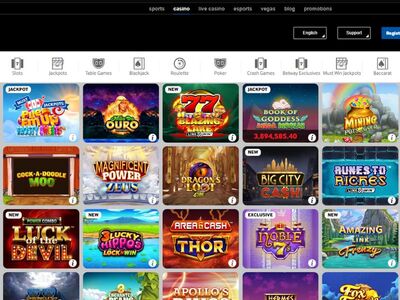
Before choosing a slot, inspect the paytable and game information. Look for the value of winning combinations, wild and scatter functions, bonus-round rules, maximum displayed win where provided, and whether special features change the stake. For table games, read the rules for side bets, payout structures and any differences between variants. Understanding the information screen will not predict a result, but it can prevent an avoidable misunderstanding.
Compare slots, tables and live games on practical grounds
Slots are usually the easiest category to browse because each title presents a self-contained theme and feature set. Their variety is broad: named examples in the catalogue include Hold & Win games, cascading-reel titles and other video-slot formats. Compare them by mechanics and pace rather than by artwork alone. A familiar theme does not make two games play alike, and a complicated bonus feature may not suit a short, controlled session.
Table games are better compared through rules, bet types and decision-making. Blackjack variants can differ in side bets and table rules; roulette may differ by wheel format and payout structure; baccarat can include several betting options. In each case, understand the main wager before considering extras. Side bets may look attractive because of their presentation, but they can carry different probabilities and should be treated as separate decisions.
Live tables add atmosphere, dealer interaction and a visible stream, but they may have different minimum stakes, table limits and waiting times from digital versions. Game-show formats add entertainment value, while live dealer games can be less convenient if your connection is unreliable. Compare the total experience: speed, clarity, minimum stake, privacy, data use and concentration required. The most entertaining presentation is not necessarily the most suitable option for your circumstances.
Build a game list that remains easy to control
Once you have compared categories, create a simple session plan. Select one primary game type, one backup and a stopping point before beginning. For example, you might choose a particular slot for feature comparison, then switch to a table game only if you still want a slower pace. Avoid changing categories simply because the first few rounds were disappointing. A new format changes the entertainment, not the underlying uncertainty of gambling.
Use favourites and recent-game tools to reduce impulsive browsing, but keep the list small. A useful list might contain one classic slot, one feature-rich video slot, one table game and one live option. Review the list periodically and remove titles that feel too fast, confusing or costly. If account controls offer deposit limits, wager limits, loss limits, cooling-off periods or time-outs, consider setting them before exploring the catalogue.
Keep notes separate from predictions. You can record whether a game was enjoyable, understandable and appropriate for your planned session, but do not interpret previous wins or losses as signals about what comes next. Random outcomes do not become “due,” and a demo result does not validate a real-money strategy. If the search itself becomes more compelling than the entertainment, pause the session and return another day with a fresh decision.
Questions about choosing casino games
Is a higher RTP game always the better choice?
No. RTP is a long-term mathematical measure, not a session guarantee. A game with a higher published RTP can still lose during a particular visit. Compare RTP with volatility, rules, pace and your own budget. If the information is unavailable or unclear, do not assume the game has favourable terms.
Should I start with live dealer games?
Start with live dealer games only if you value streamed tables and a slower, social presentation. Check the table rules, minimum stake, limits and connection requirements first. Digital versions may be easier to pause and compare, while live tables may involve fixed pacing and less flexibility during a round.
What is the simplest way to narrow a large lobby?
Choose one category, set a spending and time boundary, then shortlist three to five titles. Read each paytable or rules screen and remove games with unclear mechanics or unsuitable stakes. Filters such as New, Hot and Top 50 can help you browse, but they should not replace your own comparison.
