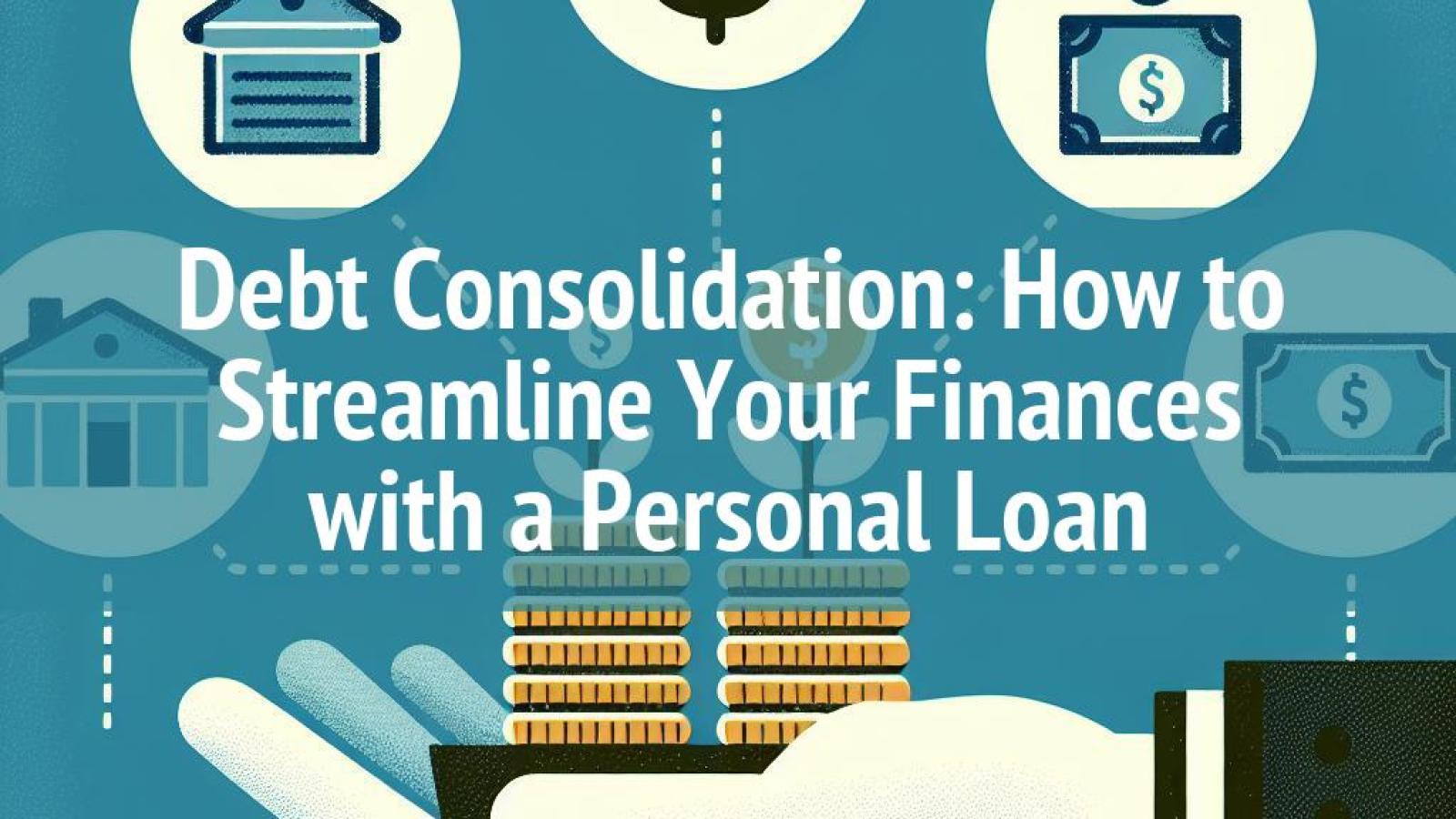
The Reality of Moving Your Debt Into a Single Payment

Personal loans and debt consolidation services
Is a personal loan a good idea for debt consolidation? It depends entirely on whether you are solving the math problem or just rearranging the furniture. If your credit card interest rates are sitting at 24% and you can land a loan at 11%, the math works in your favor. If you are simply moving high-interest debt to another high-interest loan, you are just running in place.

Most people start this journey when the monthly minimums become a source of constant anxiety. It starts with one late payment, then another, and suddenly you are managing six different due dates across three different banks. The mental load of tracking those dates is often more exhausting than the actual money owed.

We see this pattern constantly. People feel like they are drowning, so they look for a life raft. Sometimes that life raft is a legitimate financial tool, and sometimes it is just a bigger, heavier life raft that sinks even faster. You have to know which one you are grabbing before you jump.

Breaking Down the Math of Consolidation Loans

When you look at the different ways to combine debt, you’ll find that the “best” option depends on how much you owe and how quickly you need the cash. For some, a traditional bank loan is the way to go. For others, specialized lenders offer much faster turnaround times.

If you need significant capital to wipe the slate clean, you might look at Discover, where you can get up to $40,000 for debt consolidation. This is a classic move. You take out a large chunk of money at a lower interest rate and use it to kill off the high-interest credit card balances. It turns a messy pile of debts into one predictable monthly payment.

Speed is another factor. If you are in a tight spot, waiting two weeks for a bank’s approval can feel like an eternity. Some lenders cater to that urgency. For instance, OneMain offers debt consolidation loans with fixed payments and can provide money as fast as one hour after closing, with loan amounts reaching up to $30,000.

The math is simple but unforgiving. You must compare the Annual Percentage Rate (APR) of the new loan against the weighted average of your current debts.

Feature Personal Loan Credit Card Consolidation
Typical Limits Up to $40,000+ $5K to $100K
Speed Days to Weeks As soon as the same day
Structure Fixed term/payments Varies by lender

Sometimes the math doesn’t favor a loan. If your credit score has taken a hit, you might not qualify for the low rates that make consolidation worthwhile. In those cases, you aren’t looking for a loan; you are looking for relief.

When a Loan Isn’t the Best Tool for the Job

It is easy to fall into the trap of thinking that more debt is the only way to fix old debt. If your debt is fundamentally unmanageable because your income is too low to cover even the minimums, a new loan might just be a temporary band-aid. You might end up with a loan and the same old credit card balances still sitting there, ready to be charged up again.

This is where debt relief programs come into play. Unlike a loan, which is just more money you owe, a debt relief program often involves negotiating with your creditors. You might work with a company to lower your interest rates or settle for a lump sum that is less than what you originally owed.

If you want to see what’s available, you can research the best debt consolidation programs to see how they differ from standard loans. These programs are designed to simplify the repayment process and reduce the total amount you pay over time. They are a different beast entirely.

Are you actually fixing the spending problem? This is the question most people avoid. If you consolidate your debt but don’t change your habits, you are just setting a trap for your future self. It is a cycle that many people find themselves in repeatedly.

Debt relief isn’t a magic wand. It can be a heavy lift. Sometimes it requires a structured plan that might impact your credit score in the short term, but the goal is long-term stability.

Navigating the High-Limit Credit Card Route

For those with very high debt loads, a standard personal loan might not be enough. Some people find themselves needing to move $50,000 or even $75,000 into a single stream. In these instances, credit card debt consolidation loans might be the preferred route.

These are specialized products designed to handle larger sums. For example, some lenders offer credit card consolidation loans ranging from $5,000 up to $100,000. The advantage here is often the speed of funding and the ability to tackle massive amounts of high-interest revolving debt in one go.

The trade-off is often the requirement for a high credit score. To get a loan of that magnitude, lenders want to see that you are a safe bet. They want to see a history of on-time payments and a manageable debt-to-income ratio.

If you don’t qualify for these high-limit products, don’t panic. It doesn’t mean you are stuck forever. It just means you have to look at other avenues like:

* Nonprofit credit counseling.
* Debt management plans through a third party.
* Snowball or avalanche repayment methods using your own cash flow.

It takes work. It takes discipline. It is never easy.

Seeking Professional Guidance and Counseling

There is a significant difference between a debt relief company that promises to make your debt vanish and a legitimate credit counselor. The former is often a predatory outfit looking for a quick fee; the latter is a professional who helps you build a roadmap.

If you are feeling overwhelmed, you should look for a legitimate source of guidance. For instance, in certain regions like Washington State, you can consult with a legitimate credit counselor to help you develop a personalized money-management plan. These professionals look at your entire financial life, not just the debt you want to move.

Another massive resource is Consolidated Credit. They have helped over 10 million people since 1993 by offering credit counseling and debt management plans. This isn’t about taking out a new loan; it is about managing the money you actually have more effectively.

Many people fear that calling a counselor is an admission of defeat. It isn’t. It’s actually a strategic move. By talking to someone who understands the nuances of interest rates and repayment terms, you can stop guessing and start acting.

A good counselor won’t just tell you what you want to hear. They will tell you the hard truths about your spending and your debt-to-income ratio. That is exactly what you need to hear if you want to get out from under this.

The Long Road to Financial Stability

Managing $30,000 in debt is a different beast than managing $3,000. The psychological weight is different, and the timeline for repayment is much longer. If you are trying to figure out how to pay off $30,000 in a year, you are essentially looking at a very aggressive monthly payment that requires significant lifestyle changes.

Most people find that a multi-year plan is more realistic. A three-year or five-year plan allows you to breathe while still making steady, meaningful progress toward a zero balance. The goal is consistency, not a sudden sprint that leaves you exhausted and broke by month six.

Whether you choose a personal loan, a credit card consolidation product, or a nonprofit credit counseling program, the end result is the same: you need a single, manageable path forward. You need to stop the bleeding of high interest and start the process of rebuilding.

The numbers eventually stop being scary once you have a plan that actually works.

Jetzloan covers this in more detail.

A few things readers ask

Is a personal loan a good idea for debt consolidation?

A personal loan is a good idea if its interest rate is significantly lower than your current unsecured debts, helping you reduce total interest and simplify payments.

How much is the payment on a $50,000 consolidation loan?

Monthly payments vary based on your interest rate and term, but a $50,000 loan at 10% for five years typically costs approximately $1,060 per month.

How to pay off $30,000 in debt in 1 year?

To clear $30,000 in debt in 12 months, you must pay roughly $2,500 per month plus interest through aggressive budgeting or a low-interest consolidation loan.

What is the easiest debt consolidation loan to get?

Loans from online lenders with lower credit score requirements or secured loans backed by collateral are generally easier to obtain than traditional bank loans.

What are the benefits of using debt consolidation services?

These services can help negotiate lower interest rates or create structured repayment plans to manage overwhelming debt more effectively.
Navigating the Arizona Mortgage Maze: A Reality Check for Local Buyers

Arizona mortgage and home loans

A lot of people think they have to wait for interest rates to hit historic lows before they can buy a home in the Grand Canyon State. They sit on the sidelines watching the news, convinced they missed the boat because they didn’t buy back in 2020. This mindset is a mistake, and it’s why so many families stay stuck in the Phoenix or Tucson rental loop longer than they’d like.

The truth is that the “perfect” time to buy isn’t about what’s happening in the global economy; it’s about your specific finances and what’s actually available in your local inventory. You can always refinance a rate later, but you can’t easily change the price you paid for the house once the market shifts. If you can afford the monthly payment today, the timing might be better than you think.

As of June 11, 2026, the market numbers are pretty clear, even if they’re a bit stubborn. According to Bankrate, current interest rates in Arizona are sitting at 6.63 percent for a 30-year fixed mortgage and 6.13 percent for a 15-year fixed mortgage. These aren’t the “cheap money” rates we saw a few years ago, but they are a stabilized reality you can actually plan around.

Real estate in Arizona is a marathon. You need to decide if you’re running a sprint or a long-distance trek before you lace up your shoes. Understanding your options is the first step toward actually holding those keys.

Decoding the Current Rate Environment

Interest rates are the biggest moving part here. When you look at your monthly payment, the rate is the main lever. A 1% difference in your interest rate can mean hundreds of dollars a month over the life of a 30-year loan. That’s money that could go toward a new deck or a college fund instead of just disappearing into interest.

There’s a lot of confusion about fixed versus adjustable rates. A fixed-rate mortgage gives you predictability. You’ll know exactly what your payment is in year 15, which helps when costs are rising. An adjustable-rate mortgage (ARM) might offer a lower starting rate, but you’re basically gambling that rates won’t spike significantly during your term.

If you plan to move in three to five years, an ARM might make sense. If you want to settle in Scottsdale and stay for decades, stick to a fixed rate. It’s a simple distinction, but many buyers get lost in the math and forget their long-term goals. Don’t let a slightly lower initial payment blind you to the possibility of a much higher one later.

When you start shopping, use tools like the financial calculators offered by Arizona Central Credit Union to estimate your monthly payments. It gives you a baseline before you ever talk to a loan officer. It’s much better to realize a payment is too high on a calculator than on a closing disclosure.

Here is a quick look at how some common loan types compare in the current market:

Loan Type Best For… Key Characteristic
30-Year Fixed Long-term stability Predictable monthly payments
15-Year Fixed Building equity fast Lower total interest paid
FHA Loans Lower credit scores Easier qualification for many
VA Loans Veterans & Service Members Often requires no down payment

Finding the Right Money for Your Situation

Not everyone has a huge pile of cash in a savings account. The idea that you need a 20% down payment to buy a house in Mesa or Chandler is a myth that keeps people stuck. There are plenty of ways to get into a home with less money down, as long as you understand the trade-offs.

For example, the National Bank of Arizona offers an Affordable Home Mortgage Loan Program. This path allows for a 3% down payment and includes benefits like reduced lender fees and lender-paid private mortgage assistance. This is a huge help for first-time buyers who have steady income but haven’t had years to save a massive lump sum.

If you’re looking at properties as an investment rather than a place to live, your strategy changes. Real estate investors often look for different products than residential buyers. You might want to check BiggerPockets to see which lenders in Arizona are specifically rated for investment properties. Investment loans usually require higher down payments and have different interest rate structures.

Many buyers realize they can use different programs to bridge the gap. You might use a specialized program for the purchase but plan to refinance into a standard conventional loan once your equity grows. It’s about using the right tool for the job. A hammer is great for nails, but you wouldn’t use it to drive a screw.

Take Sarah, for example. She wanted a bungalow in Tempe but only had 5% saved. Instead of waiting three more years, she used a program with lower down payment requirements. She secured the home before the price climbed another $20,000, and she now has more equity than she would have had if she had waited.

The Nuances of Credit and Pre-Approval

Your credit score isn’t a static number. It’s a moving target that dictates the price of your money. Even a small bump in your score can save you thousands over the life of the loan. Before you walk into a house, you should know exactly where you stand.

Pre-approval is the heavy hitter here. A pre-qualification is just a guess based on what you tell a lender. A pre-approval is a formal commitment after they have looked at your actual tax returns, pay stubs, and bank statements. In a competitive market like Phoenix, a seller isn’t going to take your offer seriously without a solid pre-approval letter.

When you’re working with a lender, ask about the “all-in” cost. People often focus only on the interest rate and forget about closing costs. You might find a lender with a lower rate, but if their origination fees are huge, you end up paying more in the long run. Compare the Loan Estimate forms from at least three different sources to see the real difference.

If you’re unsure where to start, arizonaziploan.com can help you navigate the initial steps. Getting your ducks in a row before you start touring homes prevents the heartbreak of falling in love with a property you simply cannot qualify for. It saves time, emotional energy, and money.

Keep these steps in mind to stay ahead of the game:

  • Check your credit report for errors at least six months before applying.
  • Avoid opening new credit cards or making large purchases on credit right before a mortgage application.
  • Gather your last two years of W-2s and tax returns ahead of time.
  • Limit large, unrecorded cash deposits into your bank accounts.

Strategic Planning for the Long Haul

Buying a home is a financial decision, but it’s also a lifestyle one. You aren’t just buying a structure; you’re buying a location, a school district, and a commute. The math might work, but if you hate the drive to your job in Gilbert, the house won’t feel like a home. Make sure the numbers and the lifestyle actually fit together.

Some people make the mistake of spending their entire budget on the mortgage. This leaves them “house poor.” If your mortgage, taxes, and insurance take up 45% of your take-home pay, you’re going to be stressed every time the AC unit needs a repair. Aim for a more sustainable balance that leaves room for savings and maintenance.

I always suggest having an emergency fund that’s separate from your down payment. Homes need maintenance. Roofs leak, water heaters die, and the desert heat can be brutal on your HVAC system. If all your cash is tied up in the house, a $5,000 repair can feel like a catastrophe. Having a buffer is the difference between a minor inconvenience and a financial crisis.

Finally, think about resale. Even if you plan to stay forever, buy with the “next buyer” in mind. Homes with standard layouts and neutral colors generally sell faster and for more money. It’s a practical way to protect your investment from the day you move in.

The Arizona market is complex, but you can handle it if you approach it with data rather than emotion. Whether you are a first-time buyer using a low down payment program or a seasoned investor looking for high-yield properties, it comes down to preparation. Know your numbers, understand your local options, and don’t let the fear of fluctuating rates stop you from building real wealth through property.

Good to know

What are the different types of home loans available in Arizona?

Common options include conventional loans, FHA loans for lower credit scores, VA loans for veterans, and USDA loans for qualifying rural areas.

What is the average down payment required for an Arizona mortgage?

Down payments vary by loan type, ranging from 3.5% for FHA loans to 0% for certain VA or USDA loans, though 20% is standard for conventional loans to avoid PMI.

How much does it cost to close on a home in Arizona?

Closing costs in Arizona typically range from 2% to 5% of the home's purchase price and cover taxes, lender fees, and title insurance.

Can I get a mortgage in Arizona if I am self-employed?

Yes, self-employed borrowers can qualify by providing tax returns and profit and loss statements to prove consistent income.

How does the Arizona real estate market affect mortgage rates?

While mortgage rates are primarily driven by national economic trends, local demand and inventory levels in Arizona can influence competition and closing timelines.